

2025-11-20
What is vibration?
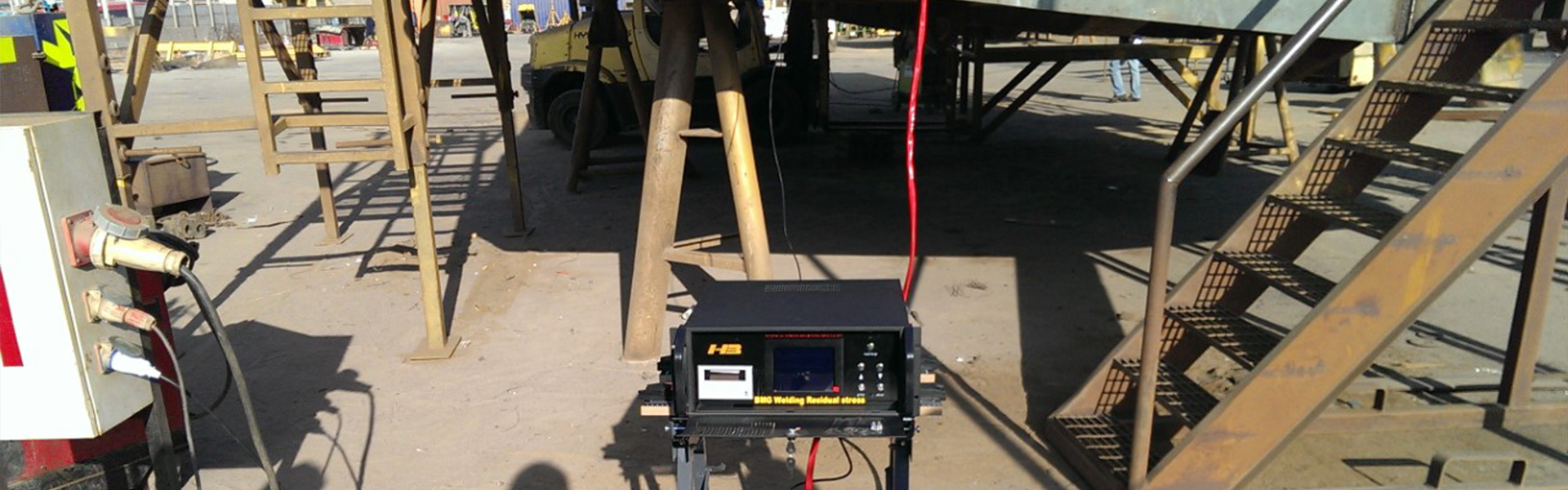
The term Vibration Stress Relief (VSR) identifies a metal-physical method of dimensional stabilization of a metal component or structure by means of forced vibrations. In use since the 1960s in the USA, the stress relieving method by means of forced vibrations consists in making the piece vibrate to be stabilized, for a certain period of time, at certain resonant frequencies thanks to a vibrator engine with variable eccentric masses.
When to perform vibration process:
For complex structures with intersected weld seams
In case of structures that must operate at room temperature
In case of structures with medium content of C steels or alloyed steels
In case of structures subject to corrosion
In case of structures or components that must undergo machining by machine tools
Why is vibration important?
The vibration process is functional to the reduction of the residual stresses that occur in any product that undergoes mechanical processing, welding, chemical or metallurgical processes.
Reducing residual stress means:
reduce the risk of distortions following machining operation
reduce the risk of delayed stresses
reduce the risk of premature fatigue failures
Vibration process... NATURALLY GREEN
the benefit of an environmentally sustainable and low-cost technology
Reduce energy consumption up to 95% compared to the classic annealing system, obviously without sacrificing the quality of the result.
Reduce fuel consumption and therefore harmful emissions into the environment by eliminating the need to transport components to companies equipped with annealing furnace
Reduce the use of spare parts:
by using the stress relief treatment, after a certain period of exercise, it is possible to extend the average life of the component. This means reducing the energy costs necessary for the production of a new component to replace the broken one.
A comparison between the two most-known stress relieving methods
ANNEALING
Reliable, if correctly applied;
it can generate additional stresses that lead to structural variations or dislocations if the procedure is not correctly performed (too rapid cooling; lack of constant temperature monitoring);
it can cause surface oxidation phenomena, unless particular measures are implemented such as vacuum treatment or treatment in an inert atmosphere.
Fundamental parameters to keep in mind:
thermal energy
transport costs (maybe oversized load)
handling costs
costs for a possible straightening procedure
oxidation
costs related to machine downtime
environmental costs
VIBRATION STRESS RELIEF
Savings
Time: the average intervention times on a single treated component are 1 ÷ 2h
Economic: 95% cheaper (elimination of transport, handling, machine downtime, downtime)
Output quality:
As good as/better than other technologies
Greater fatigue resistance of the treated components
Reduces repairs, scrap and rework
Process always under control by the operator
Applied when and where it is needed.
No weight or size limits.
Additional benefits not to be underestimated:
Reduced batches of product
shortened LT
Reduced processing times
Higher quality standards
Most competitive price